TransitFORWARD 2040 Vision Plan
The TransitFORWARD 2040 Vision Plan (TF2040) is Broward County's multi-phase strategy to strengthen and enhance the county's tran sit system through improved connectivity, expanded access, increased service frequency and hours, new microtransit service zones, and enhanced system amenities.
This plan reviewed system performance, collected rider feedback, and evaluated emerging mobility opportunities to identify recommended system changes. The plan will guide the development of a more reliable, efficient, and future-ready transit network that supports Broward's growing and diverse communities.
The plan outlines near-, mid-, and long-term improvements designed to create a more integrated and rider-focused transit network that supports growth and evolving mobility needs across the county.
Project Background
Broward County continues to grow, and travel patterns are changing, which means the transit network must evolve to keep pace with demand, development, and major premium transit investments. The TransitFORWARD 2040 Vision Plan is Broward County Transit's (BCT's) strategic upgrade to the transit network in preparation for future mobility needs by evaluating how the network performs today and determining where improvements can create faster, more reliable, and easier-to-use service.
TF2040 was developed through a transit industry best practice called a Comprehensive Operational Analysis (COA). These efforts are generally done every 3-5 years and combine rider feedback, data, and project growth through an analysis. COA's show where service is working well and where adjustments are needed to improve operational efficiency, reliability, accessibility, and ridership. The TransitFORWARD 2040 plan evaluates existing conditions, travel behavior, demographics, future growth, and system performance to guide service planning and investment decisions.
Goals
This plan has five main goals:
Process
-
Rider Needs and System Analysis
-
Listened to riders, staff and leadership at municipalities and partner agencies, and other community members about their experience with BCT today and priorities for future service.
-
Analyzed the state of the current BCT system, including ridership, service productivity, routing, stop spacing, travel speeds, reliability, and cost effectiveness.
-
Assessed the Broward County market to identify areas where transit is most needed, based on factors like the density of residents, jobs, and other activities, as well as demographics. It considered how Broward County is growing and areas where more service is likely to be needed in the future.
-
Draft Recommendations
-
Based on these analyses, the project team developed draft recommendations for future transit service in Broward County to better align with rider needs today and anticipated future growth.
-
Share draft recommendations with the community through public engagement activities.
-
Final Plan
BCT Today
BCT provides local fixed route bus, community shuttle (contracted through cities), limited stop bus, express bus, and paratransit service across Broward County. While the network covers major destinations, several routes experience slow travel times, limited frequency, or outdated alignments that no longer match how people travel. TF2040 identifies opportunities to improve service frequency, route design, connections to planned
PREMO service, and first- and last-mile access to create a more connected and reliable network. Learn more about existing BCT service
here.
What We Heard from the Community
Theme #1: Frequency and Reliability
Community members say long wait times, unreliable schedules, and limited evening and weekend service reduce the reliability of transit for many users. They highlighted the importance of having buses come more often, improving on-time arrivals, and consistent service levels throughout the week.
Theme #2: Commute Times and Route Options
Many participants reported that bus trips often take much longer than driving trips when routes are indirect, multiple transfers are required, or travel speeds are slow. They strongly support more direct routes, improved transfer connections, and travel times that better align with observed travel demand.
Theme #3: Connectivity and Accessibility
Most riders walk to the bus. Community members highlighted issues that make it hard to do that, like long distances to stops, missing sidewalks, and difficult connections between local routes, express services, and regional partners.
Theme #4: Bus Stop Amenities and Safety
Residents and riders requested enhancements to bus stops. Requests included additional shelters, improved lighting, seating, real-time arrival information, and overall upgrades to bus stop conditions. They are most concerned about safety along sidewalks and at transit stops, particularly during early-mornings and late at night.
Recommendations
TF2040 recommendations aim to reshape the BCT network over time to be fast, reliable, frequent, and easy to use. Recommendations build on the PREMO Network and respond to current and future travel demand to create a well-connected countywide transit system.
Objectives
The proposed recommendations are focused on improving travel time, increasing frequency, modernizing routes, enhancing access, and integrating services across all modes. They support two (2) key objectives:
Fast and Reliable
- Build on PREMO Network as the backbone of the system, including future light rail transit (LRT), bus rapid transit (BRT), commuter rail (CR), and high frequency bus (HFB)
- Improve travel speed and reliability
- Support better on-time performance
- Streamline routes to reduce delays
- Create more efficient operations systemwide
Frequent and Accessible
- Expand frequency on key corridors
- Extend span of service seven days a week
- Simplify routes for easier navigation
- Improve first- and last-mile access
- Enhance connections to PREMO Network
- Provide new service in areas without current fixed-route coverage
- Expand the express bus network for regional mobility
Key Benefits
The proposed system changes will deliver measurable improvements for riders as BCT grows into this new system over time. With the long-term plan, key benefits include:
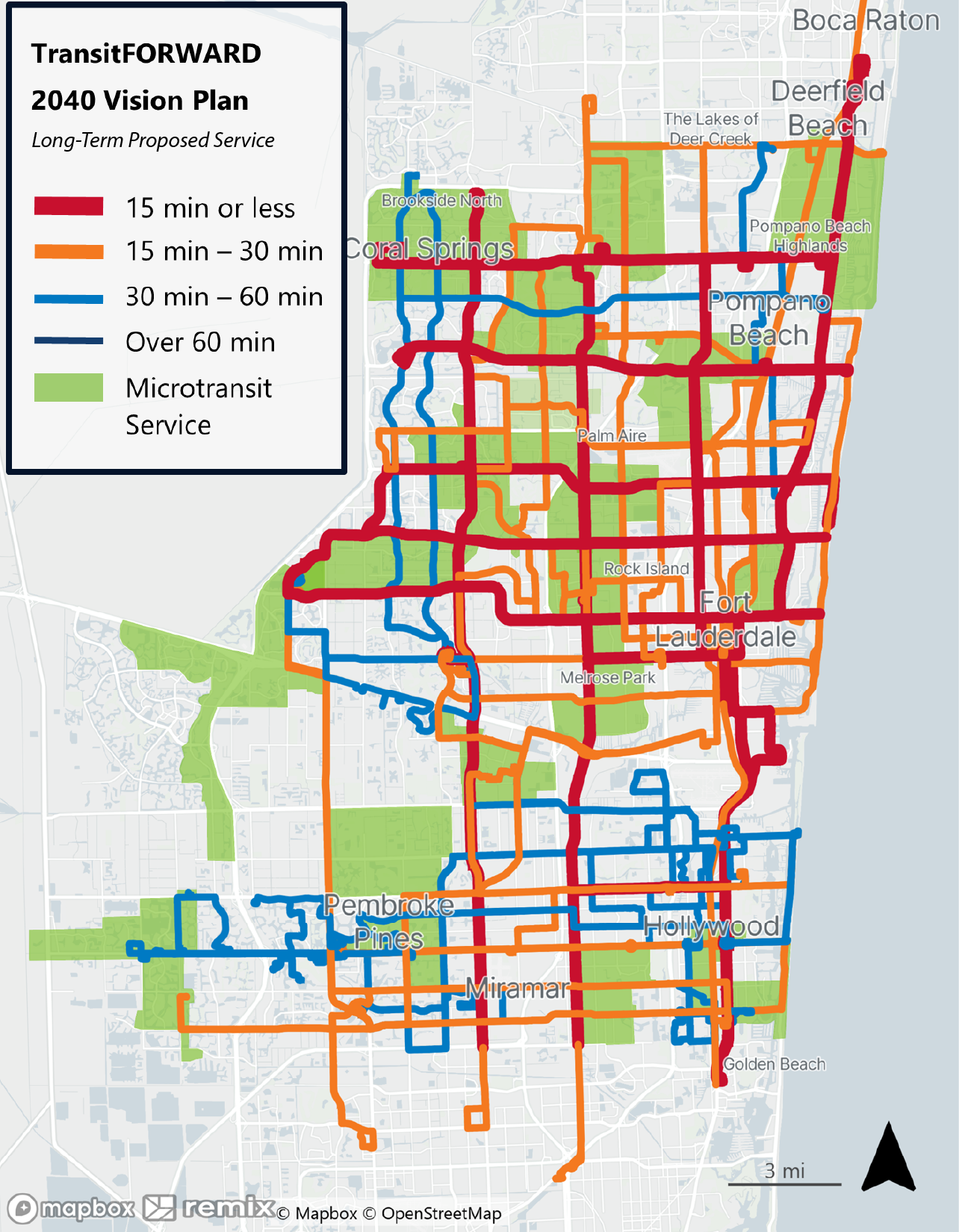
- More frequent bus routes, those that run every 15 minutes or better
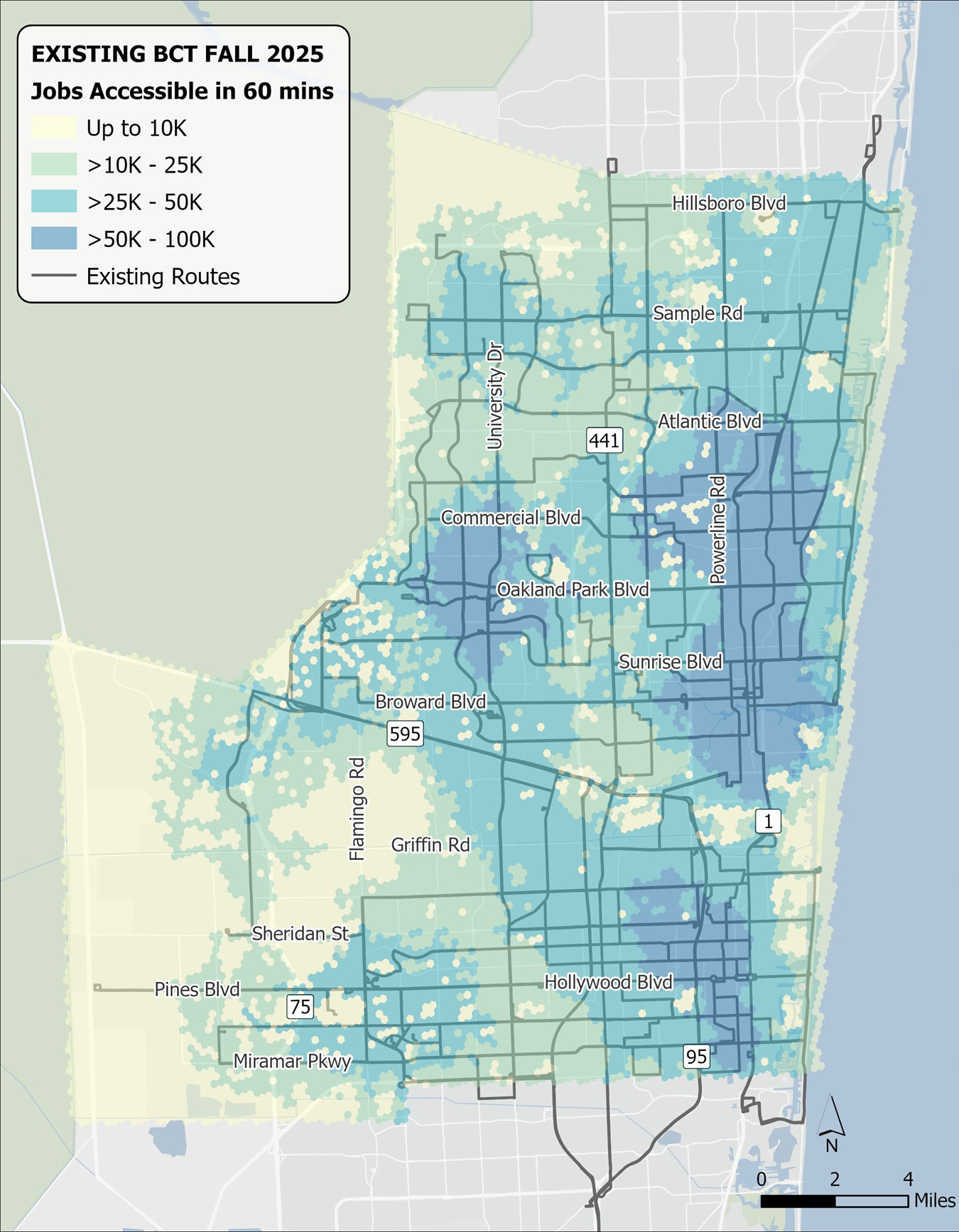
- More residents and jobs served by frequent service, with 31% of residents and 48% of jobs in Broward County accessible by routes that run every 15 minutes or better
- Expanded access to planned PREMO service like LRT, BRT, and HFB
- Improved hours of service across weekdays and weekends, including more early morning and late-night service
- New bus routes and expanded coverage to serve areas without BCT service today, like North Military Trail, Rock Island Road, and parts of Pembroke Pines and Weston
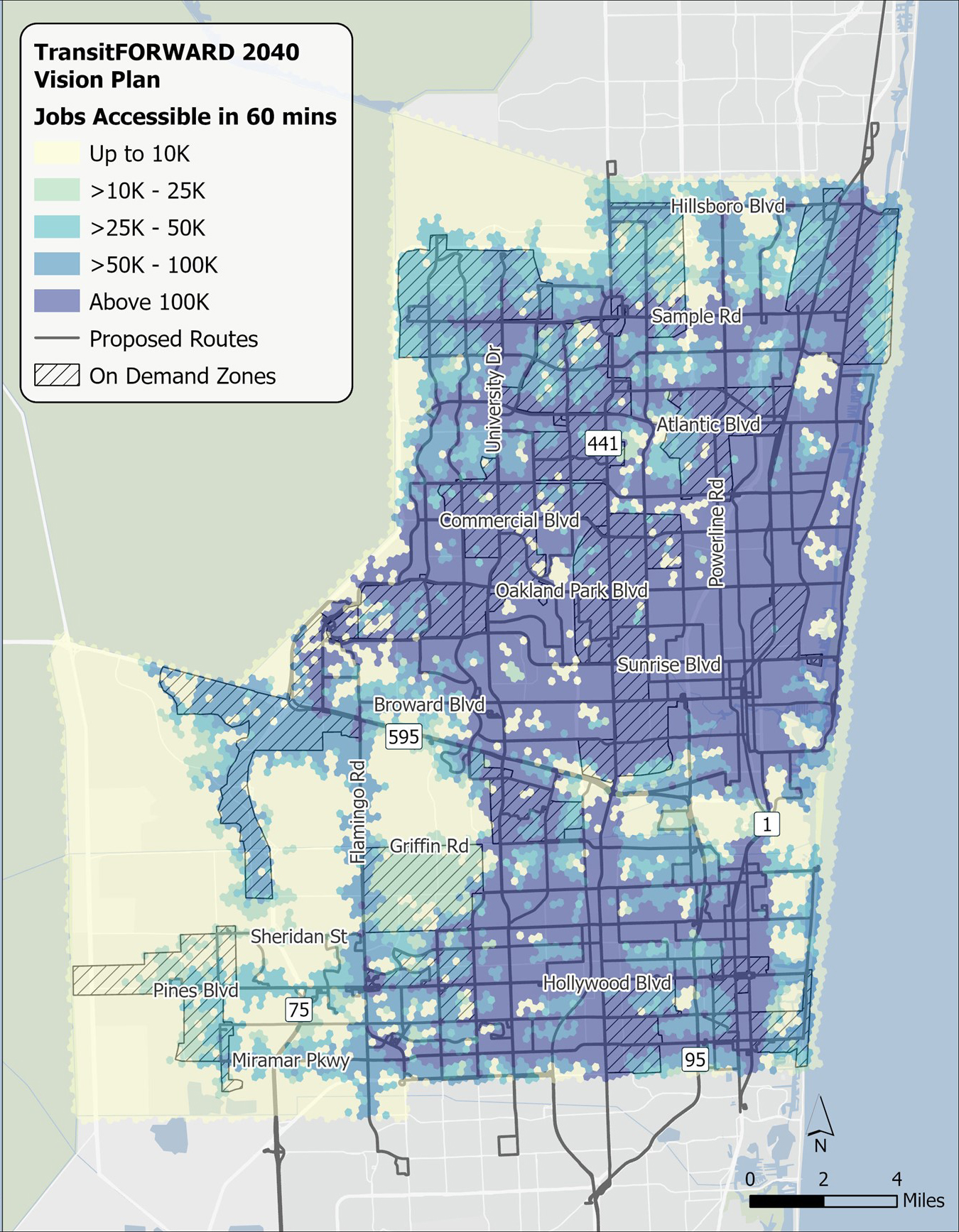
- 21 new on-demand microtransit zones
- Improved connections to Tri-Rail and future CR
- New transit centers and upgraded rider amenities
The maps below show an example of how the proposed network will make it easier for Broward County residents to reach more jobs. The map on the left shows how many jobs someone living in a given area could get to by transit within an hour, using the current service. The map on the right shows the higher number of jobs they can reach in the same time with the proposed long-term service.
Recommendations Overview
Phased Approach
TF2040 is a transformative investment in Broward County's future. The plan will be implemented over a 15-year period, introducing new LRT and BRT corridors alongside supporting upgrades for local fixed route buses and microtransit service. Achieving this vision requires getting everyone on the same page about the needs for the transit system we are growing into and allocating resources toward these investments.
This plan shows how BCT's system will change over time. It includes:
| Phase |
Focus Areas |
|
Near-Term
(Today to 2029)
|
- Improve On-Time Performance And Reliability
- Increase Frequency On Key Routes
- Strengthen Transfers And Connections
- Launch Early Service Improvements
|
|
Mid-Term
(2030 to 2034)
|
- Expand Service Coverage And Hours
- Introduce New Mobility Options
- Add Microtransit Zones
- Improve Access To Jobs, Schools, And Healthcare
|
|
Long-Term
(2035 to 2040)
|
- Fully Integrated System: PREMO, Fixed Route, Express, Microtransit, Community Shuttles
- Eliminate Transit Deserts
- Support Long-Term Growth
- Deliver A Seamless Countywide Network
|
Recommendations will be rolled out annually as BCT updates its Transit Development Plan (TDP) each year. The first phase includes corridor studies for a light rail segment linking the airport and seaport, as well as planning for the initial BRT line along Oakland Park Boulevard. Additional corridor projects are scheduled to roll out progressively over the next decade, ensuring a phased and coordinated expansion of Broward County's transit network.
Service Types
The proposed network brings together seven (7) types of transit service, matching the right vehicle types and frequencies to each context. It includes a new type of transit for Broward County: microtransit. This on-demand service will bring new, flexible options to serve lower density parts of the county in addition to improving and providing that vital first and last mile connectivity to the system.
-
Light Rail Transit: An electric rail system designed for moderate passenger volumes, featuring stations spaced 0.5 to 1 mile apart and integrated connections to local bus, circulator, and microtransit services.
-
Bus Rapid Transit: A high-capacity bus service operating in dedicated or shared lanes, featuring transit signal priority and enhanced stations. Stops are spaced 0.5 to 1 mile apart, with seamless connections to local buses, circulators, and microtransit services.
-
Express Bus: A high-capacity coach service designed for long-distance expressway travel, operating non-stop between park-and-ride facilities and major employment centers.
-
Local Bus: A diesel or electric bus operating on local roads with stops spaced approximately ¼ to ⅓ mile apart. These routes provide both regional connectivity and local access across all land uses.
-
Commuter Rail: A passenger rail service operating on existing freight corridors, powered by electric or diesel trains. Stations are spaced 2 to 10 miles apart, providing direct connections to major employment centers
-
Community Shuttle: Small cutaway buses with seating for 8 to 20 passengers provide first- and last-mile connections between neighborhoods, commercial areas, and regional transit services.
-
Microtransit: Microtransit is a flexible, on-demand transportation service that typically uses smaller vehicles—such as vans or shuttles—to provide shared rides within a defined zone or along dynamic routes. Typically, microtransit accommodates 4 to 8 passengers per vehicle, making it suitable for low-demand areas. Riders book trips in real time, similar to rideshare platforms. Often used to connect neighborhoods to major transit hubs or premium services like LRT, CR or BRT. This type of service will be new for Broward County.
Recommendation Types
The plan uses a mix of tools and service strategies to better align Broward County's transit service with current and future needs. There are five (5) main types of changes recommended for the network:
Frequency and Service Hours Recommendations
Increasing bus frequency is central to this plan, along with extending hours for many routes on weekdays and weekends. The proposed system uses standardized clockface schedules—schedules with buses running every 15, 20, 30, or 60 minutes—to improve predictability and improve transfer timing.
Routing Change Recommendations
Routing recommendations change where the bus runs. This can involve adjusting roadway alignments, route lengths, and end points to improve efficiency and reduce travel times. In some cases, parts of an existing route may be removed and reassigned to other routes or microtransit services.
New or Split Route Recommendations
New routes have been proposed to enhance coverage, improve connectivity, and provide more direct service across the county. Longer routes have been divided at key transit centers to increase reliability and operational efficiency.
Mode Shift Recommendations
To make Broward County's transit system more efficient, the long-term plan will phase out bus and shuttle routes that very few people ride. Communities that rely on these services won't be left behind—new options like realigned routes and flexible on-demand microtransit will ensure continued access.
New Microtransit Service
Fixed-route bus service is not always the most efficient option for every area in Broward County, like low-density areas with fewer potential riders. Replacing certain local bus and community shuttle routes with on-demand microtransit can improve effectiveness and cost-efficiency. Microtransit allows riders to request trips via phone or app within 30 minutes, traveling anywhere within a defined zone and connecting to BCT transit centers. These new services are recommended to operate seven days a week.
Proposed Network Maps
Interactive Maps
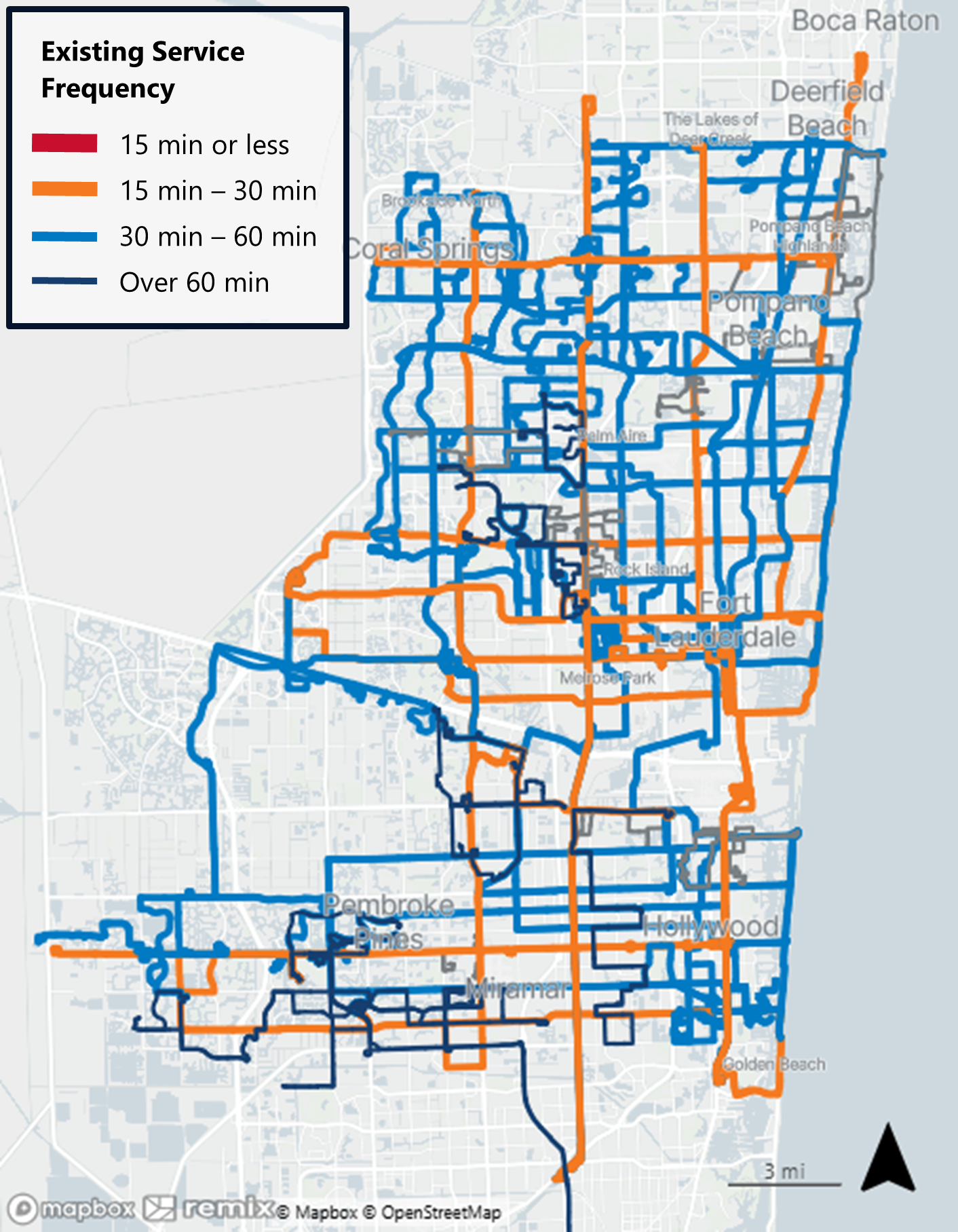
The interactive maps below provide more detail on current service and the proposed near-, mid-, and long-term networks. Zoom in to see proposed changes throughout Broward County. You can click on each route or zone to see proposed stops, hours, and frequencies. This draft information is meant to help BCT plan and budget for future service. Actual stop placement, service hours, and frequencies will be refined as service changes are implemented over time and may vary from the drafts shown below.
Current BCT Network Map
Proposed Near-Term Network Map (DRAFT)
Proposed Mid-Term Network Map (DRAFT)
Proposed Long-Term Network Map (DRAFT)
Technical Memos
Virtual Kickoff Meeting Summary
On-Board Survey Report
Existing/Planned/Future Conditions
Fare/Transfer Analysis
Data Analysis and Evaluation of Existing Service
Mobility Needs and Market Assessment
Fare/Transfer Policy Recommendations
